
First Conversations: Real Dialogues You Can Use
Stop memorizing. Start talking. We’ve got scripts for real situations — meeting someone new, ordering coffee, introducing yourself — broken down phrase by phrase with translations and pronunciation.
Why Real Conversations Matter
Here’s the thing: textbook French and actual French aren’t always the same. You can know every grammar rule and still freeze when someone asks you a simple question. Real conversations have rhythm, shortcuts, and natural pauses. We’re not teaching you perfect French — we’re teaching you French that works.
Each dialogue in this guide covers a situation you’ll actually face. Whether it’s your first day in a café, meeting someone at a community event, or just introducing yourself, you’ll find real phrases that native speakers actually use. No awkward formal language. No unrealistic scenarios. Just practical scripts you can use immediately.

Dialogue 1: Meeting Someone New
You’re at a community event or running into someone at a local spot. This is your opening conversation. It’s short, friendly, and opens the door for more talking.
You: Bonjour! Ça va?
Hello! How are you?
Bon-zhoor! Sah vah?
Them: Ça va bien, merci. Et toi?
I’m doing well, thanks. And you?
Sah vah bee-yen, mehr-see. Ay twah?
You: Très bien. Je m’appelle [your name].
Very well. My name is [your name].
Treh bee-yen. Zhuh mah-pell…
Them: Enchantée! Moi, c’est [their name].
Nice to meet you! I’m [their name].
On-shahn-tay! Mwah, say…
Key Phrases Breakdown
- Bonjour — Hello (formal, used until evening)
- Ça va? — How are you? (casual version of “Comment ça va?”)
- Ça va bien — I’m doing well (standard positive response)
- Merci — Thank you (always good to include)
- Je m’appelle… — My name is… (literal: I call myself)
- Enchantée — Nice to meet you (feminine form; use “Enchanté” if male speaker)

Dialogue 2: Ordering at a Café
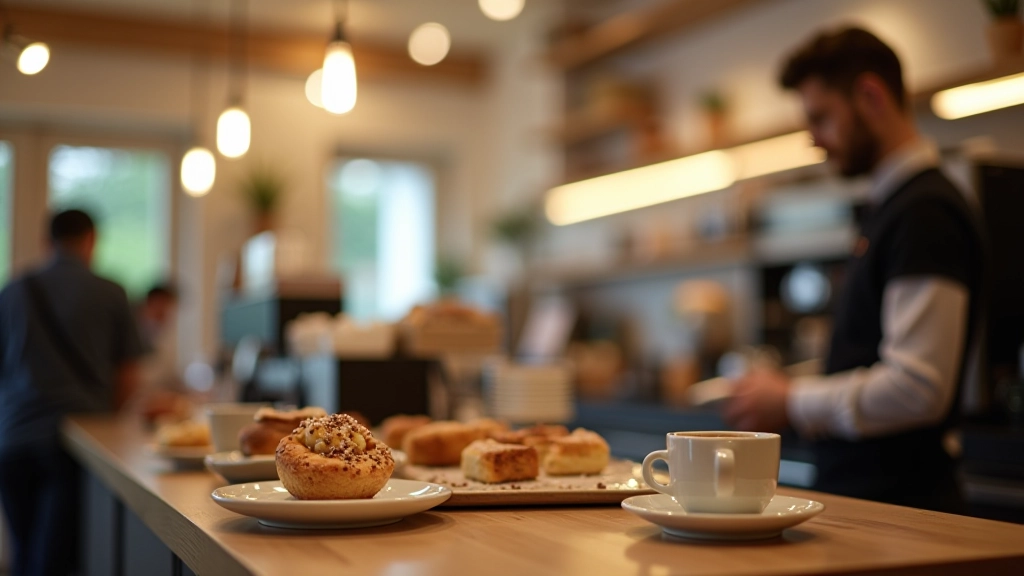
You’re standing at a café counter. This is one of the most practical conversations you’ll have. Keep it simple and direct.
You: Bonjour. Je voudrais un café, s’il vous plaît.
Hello. I’d like a coffee, please.
Zhuh voo-dreh oon kah-fay, seel voo pleh.
Barista: Serré, crème, ou allongé?
Espresso, with cream, or long (Americano-style)?
Sehr-ay, krem, oo ah-lon-zhay?
You: Allongé, s’il vous plaît.
Long, please.
Ah-lon-zhay, seel voo pleh.
Barista: Ça fait 3 euros 50.
That’s 3 euros 50.
Sah feh trois uh-roh sank-ont.
You: Voilà. Merci!
Here you go. Thanks!
Vwah-lah. Mehr-see!
Café Ordering Tips
- Je voudrais… — I would like… (polite way to order)
- S’il vous plaît — Please (formal, use with staff)
- S’il te plaît — Please (informal, use with friends)
- Serré — Espresso (short and strong)
- Allongé — Long coffee (like Americano)
- Ça fait… — That costs/is… (how to ask price)
- Voilà — Here you go (when handing payment)
Dialogue 3: Asking for Directions
You’re lost or need to find a specific place. This is a super common situation. Most people are happy to help if you ask politely.
You: Pardon, où est la gare, s’il vous plaît?
Excuse me, where is the train station, please?
Pahr-don, oo eh lah gahr, seel voo pleh?
Local: Ah, c’est tout droit. Environ 500 mètres.
Oh, it’s straight ahead. About 500 meters.
Ah, say too dwah. Ahn-vee-ron sank-sont meh-truh.
You: Merci beaucoup!
Thank you very much!
Mehr-see boh-koo!
Local: De rien. Bonne journée!
You’re welcome. Have a good day!
Duh ree-yen. Bon zhoor-nay!
Directions Essentials
- Pardon — Excuse me (polite way to get attention)
- Où est…? — Where is…? (basic question)
- C’est tout droit — It’s straight ahead
- À gauche — To the left
- À droite — To the right
- Environ — About/approximately
- Merci beaucoup — Thank you very much
- De rien — You’re welcome (literally: it’s nothing)
- Bonne journée — Have a good day

How to Actually Use These Dialogues
Reading dialogues is one thing. Using them in real life is another. Here’s how to move from this page to actual conversations.
01
Read It Out Loud
Don’t just read silently. Say the words. Hear how they sound. Your mouth needs to get used to French sounds and rhythm. This takes maybe 5 minutes per dialogue.
02
Practice Both Parts
Read your part, then the other person’s part. Switching roles helps you understand the whole conversation flow, not just what you need to say.
03
Make Small Changes
Once you’ve practiced a few times, swap out words. Different coffee order. Different destination for directions. This builds flexibility without completely rewriting everything.
04
Use It or Lose It
You don’t need a perfect moment. The next time you’re actually in a café or meeting someone, give it a shot. You’ll stumble a bit. That’s completely normal and honestly how real learning happens.
Your Next Step
You’ve got three solid dialogues covering real situations. The key now is to stop thinking about speaking French as some impossible task. It’s not. You’re going to mess up pronunciation. You’re going to forget words mid-sentence. That happens to everyone, including people who’ve been speaking French for years.
Start with whichever dialogue feels most relevant to your life right now. Master that one. Then move to the next. By the time you’ve worked through all three, you’ll have built genuine confidence. You won’t just know phrases — you’ll understand how French conversations actually flow and where to go when someone responds with something you didn’t expect.
The real win? When you realize you’re no longer translating in your head. You’re just… talking.

Keep Learning
French Pronunciation Basics: Sounds That Matter
Master the key French sounds that English speakers struggle with. We break down nasal vowels, the “r” sound, and tricky consonant combinations so you can actually be understood.
Read More
Essential Vocabulary for Daily Conversations
The 200 words you’ll actually use every day. Organized by situation — greetings, food, directions, feelings — so you’re learning words in context, not random lists.
Read More
Grammar Essentials Without the Confusion
Present tense verbs, basic sentence structure, and gender rules explained simply. No overwhelming conjugation tables. Just what you need to actually speak in conversations.
Read MoreEducational Note
This guide provides foundational conversation frameworks for beginner French learners. While these dialogues represent authentic situations and natural phrasing, regional variations and accent differences exist across French-speaking communities. Pronunciation guides are simplified phonetic approximations. For perfect fluency, consider practicing with native speakers or language instructors. Every learner progresses at their own pace — these resources are meant to support your journey, not replace formal instruction or immersive practice.