French Pronunciation Basics: Sounds That Matter
Master the key French sounds that English speakers struggle with. We break down the phonetic patterns you’ll hear constantly in conversations.
Read ArticleMaster present tense verbs, basic sentence structure, and gender rules—the fundamentals that actually matter. We’ll skip the exceptions and focus on what you need to speak right now.

Here’s the thing: most French learners get buried under grammar rules before they can even order a coffee. We’re not doing that. You don’t need to memorize every exception or understand the historical reason why nouns have gender. What you need? The 20% of rules that handle 80% of conversations.
We’ve stripped away the noise and kept only what works. Present tense verbs because that’s what you’ll use constantly. Sentence structure patterns because they’re predictable once you see them. Gender agreement because it affects how people understand you. That’s it. Three foundations that’ll unlock actual communication.

Present tense is your bread and butter. You’ll use it constantly—describing what’s happening right now, what you do regularly, what you like or want. Unlike English where we have complicated continuous forms, French keeps it simple. One tense. Three verb groups. That’s your starting point.
The first group (verbs ending in -er) makes up about 90% of French verbs. Parler (to speak), manger (to eat), danser (to dance). Once you learn the pattern, you’ve unlocked hundreds of verbs. The endings change—je parle, tu parles, il parle, nous parlons, vous parlez, ils parlent—but the logic stays consistent.
Key insight: Don’t memorize each verb separately. Learn the pattern once, apply it everywhere. That’s how real fluency builds.


French sentence structure follows a straightforward pattern: subject + verb + object. Je parle français. Tu aimes les livres. Elle habite à Montréal. Once you see it, you’ll notice it everywhere. The subject tells you who’s doing something. The verb shows what they’re doing. The object receives the action or provides information.
Questions flip the order slightly. Instead of “Tu parles français,” you’d ask “Parles-tu français?” or use intonation: “Tu parles français?” Both work. Negatives sandwich the verb with ne…pas: “Je ne parle pas espagnol.” The structure stays logical. No weird exceptions hiding in there.
What makes this so useful? These patterns appear in 95% of everyday sentences. Master them and you’ll recognize the shape of conversations instantly, even when you don’t know every word.
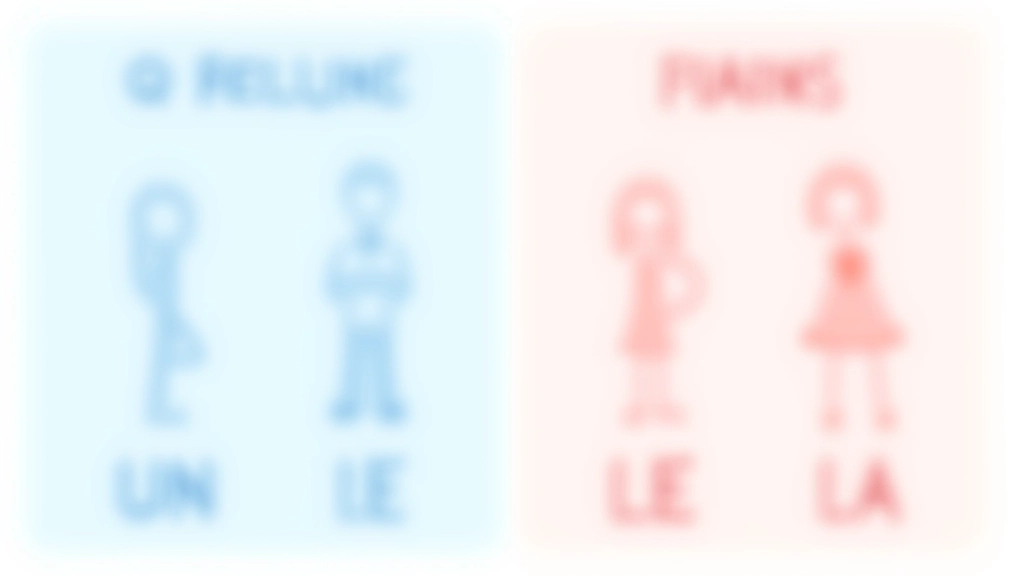
French nouns have gender. A table (une table) is feminine. A book (un livre) is masculine. This isn’t logical—it’s just how the language evolved. But here’s why you can’t ignore it: articles, adjectives, and past participles all change based on the noun’s gender.
When you say “a beautiful book,” you’d say “un beau livre” (masculine). But “a beautiful table” becomes “une belle table” (feminine). The article changes (un/une), the adjective changes (beau/belle), sometimes even the spelling shifts. It sounds complicated until you see the pattern repeating.
un livre noir (a black book), le chat gris (the gray cat)
une maison blanche (a white house), la porte rouge (the red door)
The practical takeaway? When you learn a noun, learn its article too. Don’t memorize “table”—memorize “une table.” Don’t memorize “livre”—memorize “un livre.” Your brain will absorb the gender pattern without you having to consciously think about it.
Let’s build actual sentences using what you’ve learned. Watch how these three foundations work together:
Je parle français avec ma amie.
I speak French with my friend.
Breakdown: Je (subject) + parle (present tense -ER verb) + français (object) + avec ma (feminine adjective matching amie)
Tu aimes les livres français?
Do you like French books?
Breakdown: Tu (subject) + aimes (present tense) + les livres (masculine plural object) + français (masculine plural adjective)
Elle n’habite pas à Québec.
She doesn’t live in Quebec.
Breakdown: Elle (subject) + n’habite (present tense with negation) + pas (negative marker) + à Québec (location)
See what’s happening? You’re using present tense verbs, following subject-verb-object order, and matching genders and articles. These three pieces work together to create meaning. Once you internalize these patterns, you’ll find yourself constructing sentences without thinking about the rules.

This guide covers the essential grammar foundations for beginner French learners. French, like any language, has exceptions and nuances that extend beyond these core rules. This material is educational and designed to build confidence with fundamentals. Every learner progresses differently, and your personal experience may vary. For comprehensive grammar instruction or if you’re preparing for formal assessments, consider working with a qualified French instructor or language program. These essentials are your starting point, not the complete picture of French grammar.